iStock/ZbynekPospisil
Bring consistency and vibrancy to your garden with succession planting.
Each spring arrives with a burst of energy—from the sun and in our own hearts. Gardeners the world over have spent winter months daydreaming about the last frost date, when the work of growing food and flowers begins.
But how can suburban gardeners sustain that energy? As the bugs, blight and weeds return, it’s a question that will be on our minds come July. “Gardening is only sustainable if you want to go back to it,” says suburban homesteader Michelle Bruhn. “It’s finding that sweet spot between what the plants want to do and how much you want to do, and then figuring it out together.”
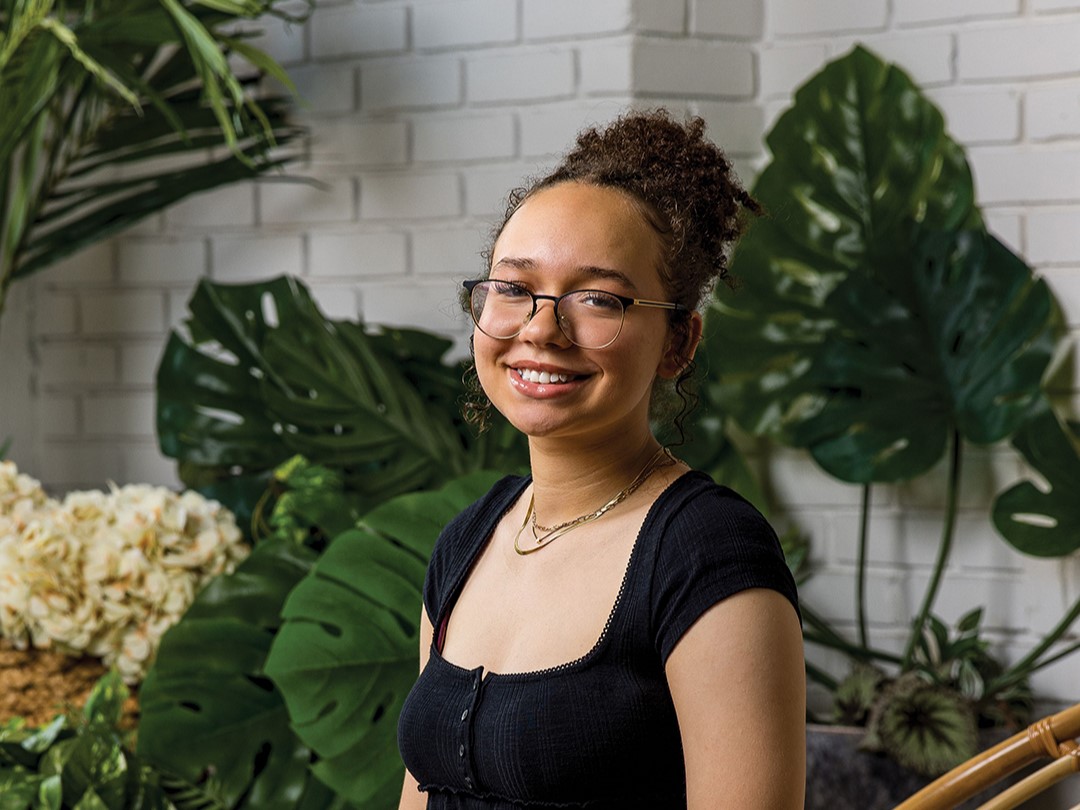
Bruhn is the founder of Forks in the Dirt and coauthor of Small-Scale Homesteading. We connected with the White Bear Lake resident to learn more about succession planting and how to extend the growing season and maintain fullness in gardens of all sizes.

A plethora of plants enjoy cool weather. Michelle Bruhn often starts her garden as soon as the ground thaws, using a low tunnel to protect seedlings from frost. Photos: Michelle Bruhn
What is succession planting?
“Succession planting is planting one thing after another to keep your soil full of growth rather than just sitting there vacant,” Bruhn says. She incorporates this technique in a few ways. In her raised beds, she’ll stagger planting, starting a new row of radishes or lettuce every two weeks. These multiple successions allow her to have a weekly supply of the crop, “rather than 800 radishes all at once,” she says.
Another approach Bruhn embraces is made possible by season extension. By monitoring her soil temperature and planting cold-hardy plants like bok choy, broccoli and carrots early with low tunnels, Bruhn can facilitate an earlier harvest. In the space left by these plants, she’ll do a second succession of crops that will produce well into the fall.
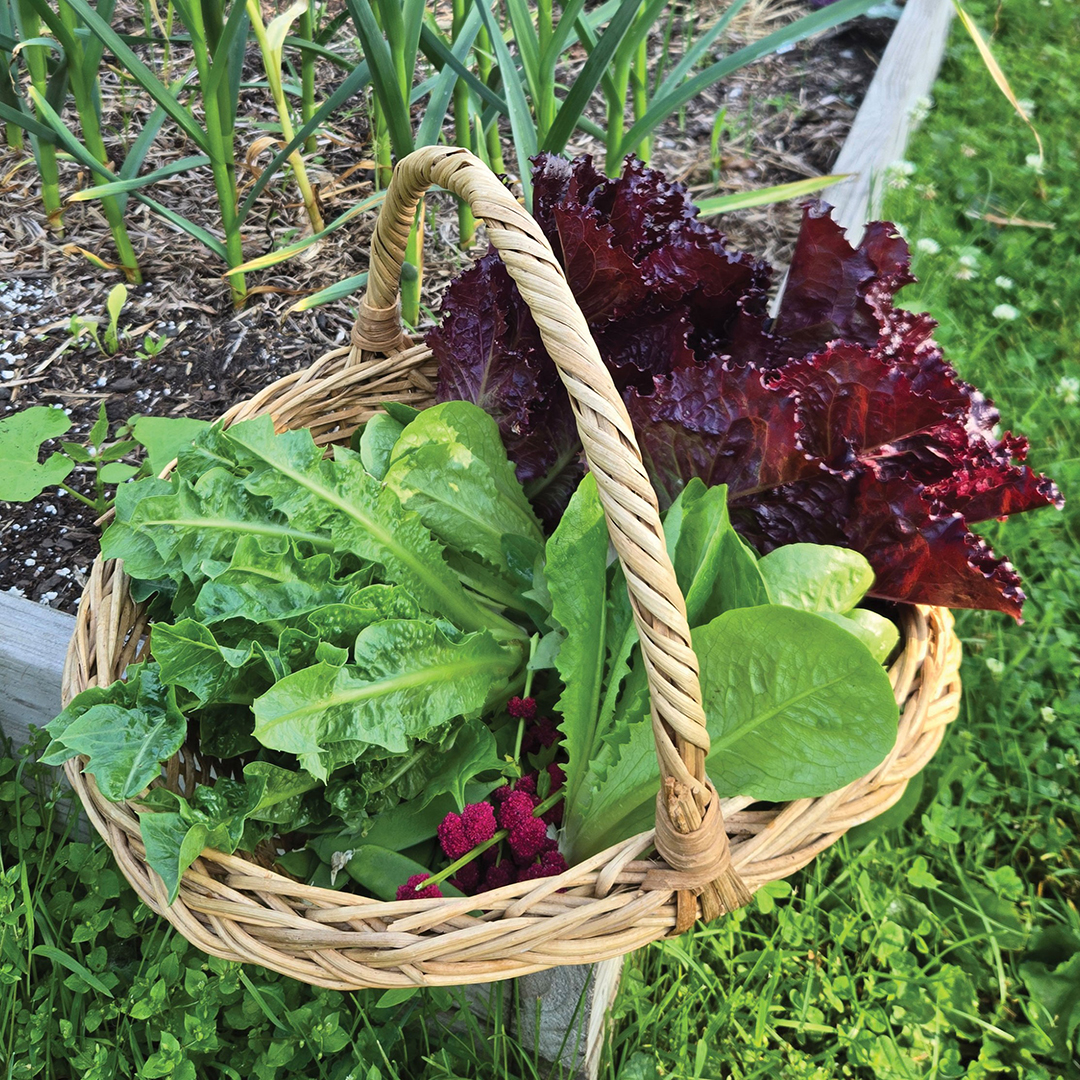
Leafy greens are “fast foods” that only take 30–40 days from germination to harvest.
When is the right time to plant seeds outdoors?
Knowing your area’s last frost date and keeping tabs on soil temperature is key. “Get yourself a soil thermometer or five if you’re like me,” Bruhn says. Analyze seed packets to learn a plant’s preferences. “Each plant has gifts and needs,” she says. By knowing how long each plant takes to grow from seed, gardeners can create a reliable growing schedule that prioritizes ready foods week by week. Amid 60- to 150-day crops, like brassicas, peppers and tomatoes, Bruhn grows a constant supply of “fast foods” like cilantro, lettuce, radish and spinach, which take only 30–40 days from germination to harvest.
What plants are best for urban gardeners?
Bruhn encourages gardeners to grow what they love. That love is what it takes to keep gardeners strong through inclement weather, noxious weeds and pests.
One of Bruhn’s tried-and-true combinations is lettuce and peppers. The pair coexists beautifully. Because lettuce is shallow-rooted and sensitive to heat, it thrives when planted near peppers, which will grow tall and eventually shade its companion from the bright mid-summer sun.
Bruhn often plants four successions of joi choi, a favorite cabbage variety. “It’s super fast-growing, and they just get huge!” she says. She also plants multiple successions of beets, carrots and radishes, and fills gaps in her garden with bush beans. “If I don’t know what I’m going to plant, I’ll just plant bush beans!” Bruhn says.
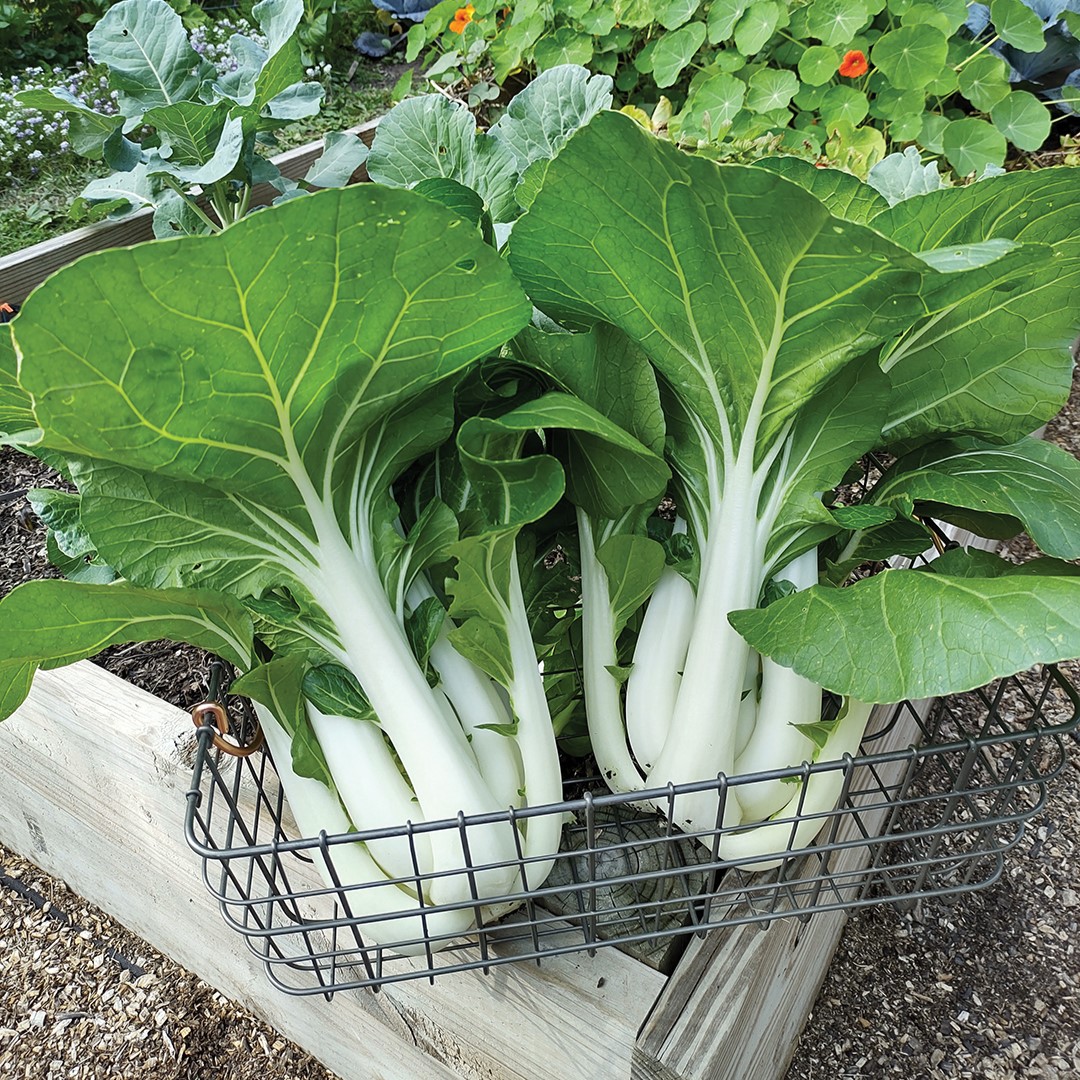
Joi choi is one of Bruhn’s favorite cabbage varieties.
What are some best practices for soil health?
In her no-till garden, Bruhn practices crop rotation, ensuring heavy-feeding plants are followed by nitrogen-fixing varieties. She also practices “chop and drop” and grows nutrient-rich plants, like comfrey, around her yard to help pull up excess calcium and phosphorus and add nutrients into the soil when composted. “The more nutrients that are in the soil, the more nutrients we have in the food that we’re harvesting. It just makes sense to have the best balance that we can,” Bruhn says.
Bruhn cautions gardeners not to rely only on compost for soil fertility. Research has found that small gardens that add compost year by year often risk an excess of phosphorus. “Getting a soil test is something that really can be beneficial,” Bruhn says. The University of Minnesota’s Soil Testing Laboratory offers tests starting at $22.
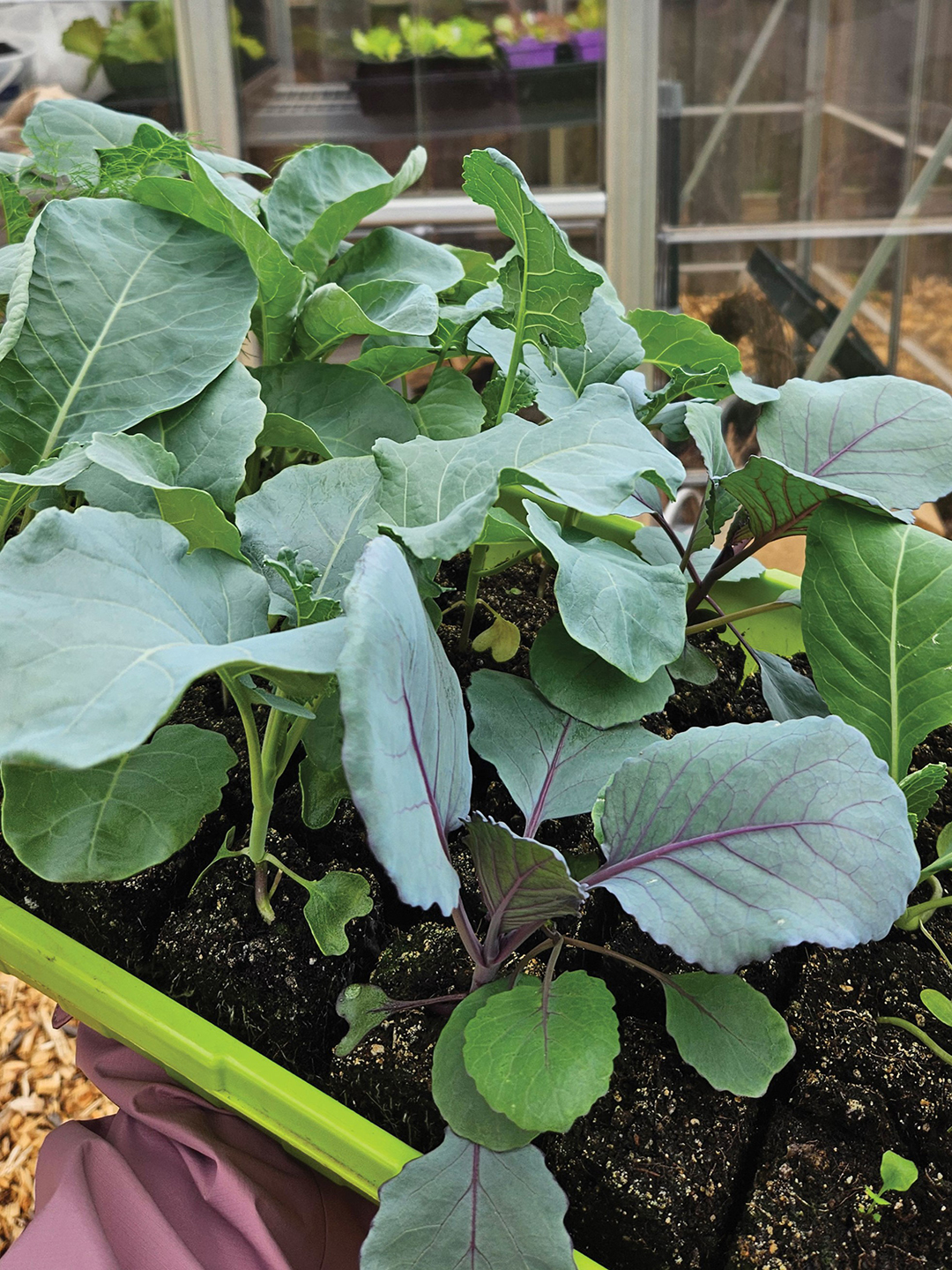
Michelle Bruhn starts a second succession of broccoli, cauliflower and cabbage in early summer. By starting these plants in movable seed trays, she can protect them from harsh sun and inclement weather.
Timing Tips
The key to succession planting is timing. Here, Michelle Bruhn shares insight into her summer sowing plans.
In mid-June to mid-July, Bruhn direct sows beets, bush beans, carrots and kale. She’ll also start bok choy, broccoli, cabbage and cauliflower in pots or trays, protecting them from pests and using a shade cloth when needed; these varieties will be ready to transplant by August.
August is also a great time to start another round of leafy greens, peas and radishes. These plants will thrive as the weather cools.
Even in the first week of September, there’s an opportunity for new life! Bruhn direct sows her last round of arugula, cilantro, leafy greens and radish at this time and often starts some spinach that she’ll overwinter for spring harvest.
Forks in the Dirt
Facebook: Forks in the Dirt